Cikgu Script: The Handcrafted Font for Authentic Branding
There’s a certain magic in a handwritten note. It feels personal, immediate, and full of character—qualities that digital text often struggles to convey. In a world saturated with crisp, impersonal fonts, a typeface like Cikgu Script emerges as a breath of fresh air. It doesn’t just display words; it delivers them with the warmth of a friend’s handwriting, the authenticity of a journal entry, and the relaxed charm of a hand-lettered sign. This isn’t about perfection; it’s about personality.
The Personality Behind the Typeface
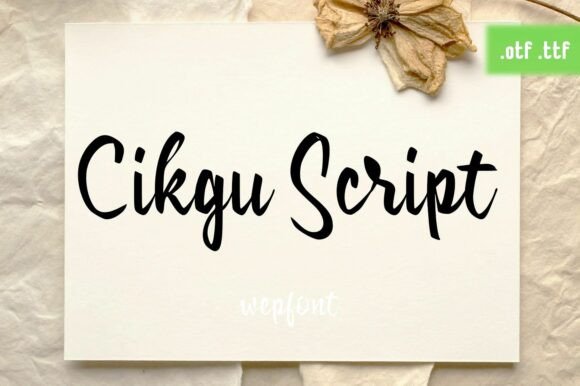
What makes a script font feel genuinely handmade? For Cikgu Script, it’s in the details. The strokes aren’t mechanically uniform; they have a natural, flowing rhythm with subtle variations in thickness. The baseline isn’t rigid—it gently wanders, mimicking the organic movement of a pen on paper. This deliberate “imperfection” is its greatest strength, cultivating an artisanal aesthetic that resonates deeply. It’s a display font designed not for long paragraphs, but for moments: a headline that welcomes, a label that comforts, a logo that feels human.
This font style sits beautifully within the broader spectrum of modern typography. While a sans serif font offers clean neutrality and a serif font brings traditional authority, a handwritten font like Cikgu Script injects immediate emotional connection. It’s a premium font choice for projects where relatability is key.
Where Comfort Meets Commerce: Real-World Applications
The true value of a creative asset is measured by its versatility. Here’s how this script font translates across different projects, moving beyond mere decoration to become a functional part of your visual communication toolkit.
- Brand Identity & Logo Design: For small businesses, lifestyle brands, and artisan creators, a logo sets the tone. Using Cikgu Script for a logo or monogram instantly communicates warmth and handcrafted quality. It’s particularly effective for bakeries, boutique shops, wellness coaches, and handmade goods creators who want their brand identity to feel approachable and genuine.
- Packaging & Labels: Imagine a product label for homemade jam, a craft candle, or a specialty coffee blend. A script font like this adds a layer of perceived care and authenticity, telling customers there’s a real person behind the product. It enhances the unboxing experience, making it feel more personal.
- Digital Presence & Social Media: On Instagram, Pinterest, or a blog, visual consistency is crucial. Cikgu Script can be used for recurring quote graphics, story highlights, or banner text to create a recognizable, cozy aesthetic. It helps in crafting social media graphics that stand out in a feed of generic text, fostering better audience engagement.
- Print & Editorial Design: From wedding invitations and greeting cards to event posters and menu designs, the font brings an inviting, celebratory mood. In editorial layouts, it can be used for pull quotes or section headers to break the monotony of body text and draw the reader’s eye to key messages.
- Marketing & Merchandise: Whether it’s a motivational quote on a tote bag, a witty saying on a mug, or the header on a digital planner, this typeface adds personality to merchandise. It’s a commercial font that can help differentiate products in a crowded marketplace.
Pairing for Impact: Practical Typography Advice
A font rarely works in complete isolation. The key to professional presentation is thoughtful pairing. Cikgu Script, with its strong personality, benefits from balance.
The Rule of Contrast: Pair it with a clean, simple sans serif font for body text. Fonts like Lato, Open Sans, or Montserrat provide excellent readability and let the script’s charm shine without causing visual clutter. For example, use Cikgu Script for a main headline (“Our Story”) and a neutral sans serif for the paragraph below it.
Hierarchy is Key: Establish a clear visual hierarchy. Use the script font for primary focal points—like a brand name, a headline, or a key call-to-action. Use your secondary, more legible font for supporting information, details, and longer text blocks. This guides the viewer’s eye and improves overall readability.
Test in Context: Always test your font pairings within the actual design mockup. How does it look on a website mockup? On a product label? The size, color, and surrounding elements matter. A creative font that looks stunning at 48px on a poster might lose its charm at 18px on a business card.
Making It Work: Readability and Licensing
While aesthetic appeal is paramount, practicality cannot be ignored. Here are a few essential considerations.
Readability First: Script fonts are best used for display purposes. Avoid setting long sentences or body copy in Cikgu Script, as it can become difficult to read. Reserve it for short, impactful phrases where its style enhances the message rather than hinders comprehension.
Explore the Glyphs: A well-crafted premium font often includes more than just basic letters. Check the font’s character map for alternate swashes, stylistic sets, or ligatures. These extras can add a unique flourish to specific letters, allowing for even greater customization in your logo design or header text.
Understand the License: If you plan to use the font for commercial projects—which includes client work, products for sale, or monetized content—ensure you have the correct commercial font license. Most foundries offer clear licensing tiers for desktop, web, and app use. Purchasing the proper license is not just a legal necessity; it supports the independent designers who create these valuable design assets.
Ultimately, choosing a typeface is about matching tool to intention. Cikgu Script isn’t the right choice for a legal contract or a technical manual. But when your project calls for sincerity, warmth, and a touch of handmade authenticity, it becomes an invaluable ally. It’s more than a font; it’s a voice—one that whispers, “Welcome, this was made with care.” Let it permeate your next project, and watch as your designs transform into personal, engaging conversations with your audience.